

The Skin Issue
Aging Isn’t Just About Getting Older.
By Andrea Nacca, PA-C, FMACP
Founder, HBOT Lounge
Aging is inevitable. How you age is not.

For decades, we have been told that aging is simply the price we pay for living longer.
We expect our energy to decline. We expect recovery to slow. We expect our skin to become thinner, duller, and less resilient with each passing year.
But what if that is not the whole story?
Aging is real. Time matters. Genetics matter. But your biology is not a fixed script. It is constantly responding to the environment you create inside and outside your body.
Your skin is one of the clearest places to see that story unfold.
It reflects sleep. Stress. Sun exposure. Nutrition. Inflammation. Hormones. Circulation. Mitochondrial function. Oxygen availability. Repair capacity.
In other words, skin aging is not just about the number of birthdays you have had.
It is also about how well your body is able to repair, restore, and renew.
Research continues to show that skin aging is influenced by both intrinsic factors, such as genetics and cellular metabolism, and extrinsic factors, such as UV exposure, pollution, smoking, nutrition, and lifestyle. A systematic review of skin aging risk factors identified age, gender, ethnicity, air pollution, nutrition, smoking, and sun exposure as notable contributors to visible skin aging.
Your Genes Are the Blueprint. They Are Not the Whole House.
Think of your genes like a blueprint.
A blueprint matters. It determines the basic structure. It gives instructions. It sets certain possibilities in motion.
But a blueprint does not build the house.
The materials matter.
The environment matters.
The maintenance matters.
The repair work matters.
The daily choices matter.
Two houses can begin with the same blueprint and look completely different twenty years later.
One is protected, maintained, repaired, and cared for.
The other is exposed to weather, neglect, and stress.
Your body works in a similar way.
Your genes give your cells instructions, but your environment influences how those instructions are expressed. This is part of what scientists study in the field of epigenetics, which looks at how factors such as behavior, environment, and aging can influence gene expression without changing the underlying DNA sequence.
This is why the conversation around aging is changing.
The question is no longer only:
What genes did I inherit?
The better question is:
What environment am I creating for those genes to express themselves?
Skin Is Living Tissue, Not a Surface Problem
Most people think of skin aging as something happening on the outside.
Wrinkles.
Texture.
Dryness.
Sagging.
Dullness.
Loss of firmness.
But skin aging begins much deeper.
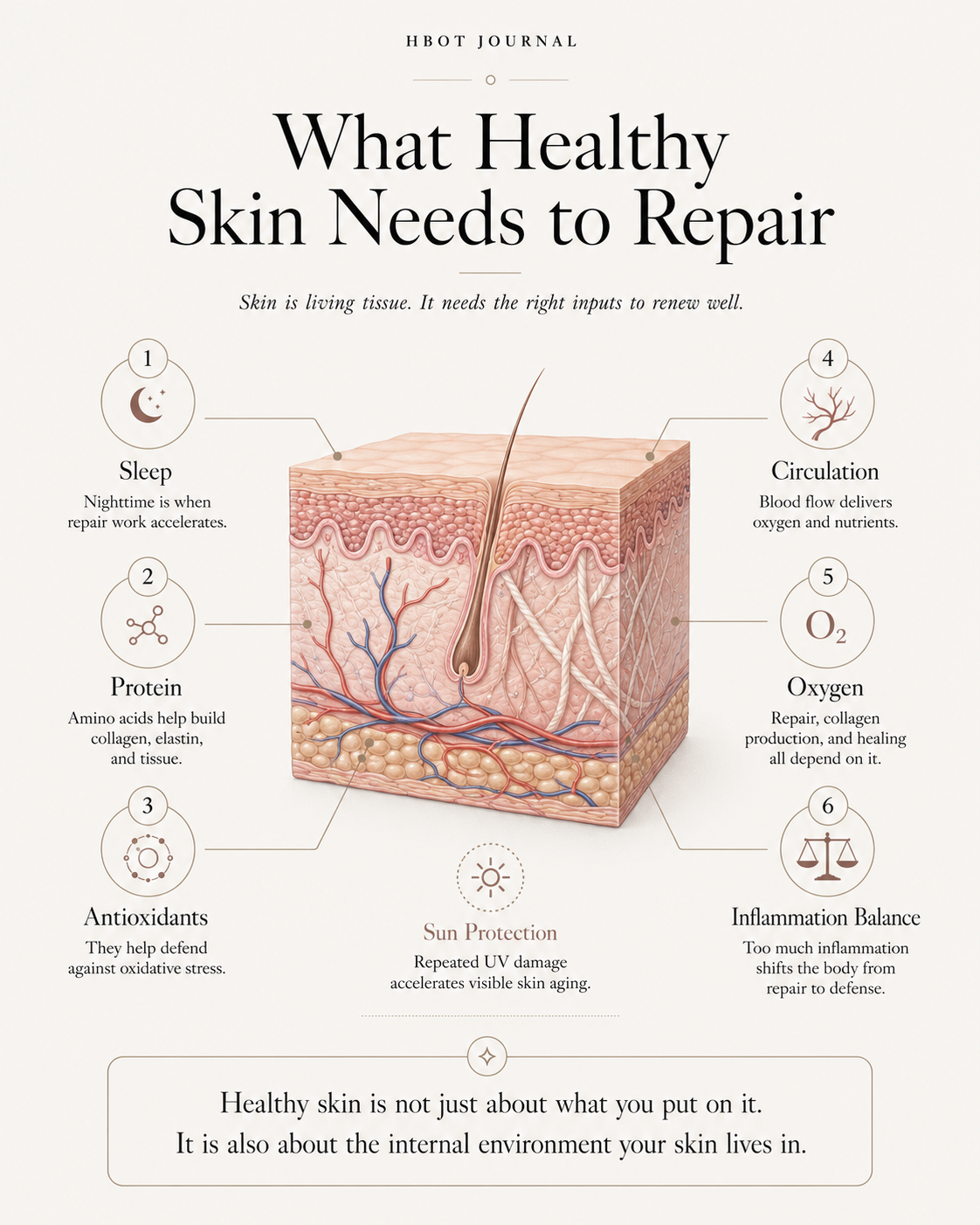
Your skin is living tissue. It is constantly communicating with your immune system, blood vessels, hormones, nervous system, collagen-producing cells, and mitochondria.
Every day, your skin is deciding whether it has enough resources to repair.
Does it have enough protein to build collagen?
Enough antioxidants to handle oxidative stress?
Enough sleep to complete overnight repair?
Enough circulation to deliver nutrients?
Enough oxygen to support healing?
Low enough inflammation to rebuild instead of defend?
This is why healthy skin is not only about what you apply topically.
It is also about the internal environment your skin is living in.
Oxidative stress is one of the major mechanisms involved in skin aging, especially extrinsic aging driven by UV exposure, pollution, smoking, and other environmental factors. UV radiation contributes to photoaging through DNA damage, collagen degradation, oxidative stress, and inflammation.
Skin is like a garden.
A garden does not become healthy because you water it once.
It becomes healthy because the soil is supported, the weeds are managed, the roots are nourished, the sunlight is balanced, and the environment allows growth.
Your skin works the same way.
You cannot force healthy skin from the outside if the internal environment is depleted.
You support it by creating the conditions where repair can happen.
Sleep is water.
Protein is building material.
Antioxidants are protection.
Movement is circulation.
Stress regulation is calm weather.
Oxygen is one of the resources every repair process depends on.
This is the heart of healthy aging.
Not chasing youth.
Supporting repair.
Where Oxygen Fits In
Oxygen is not optional for healing.
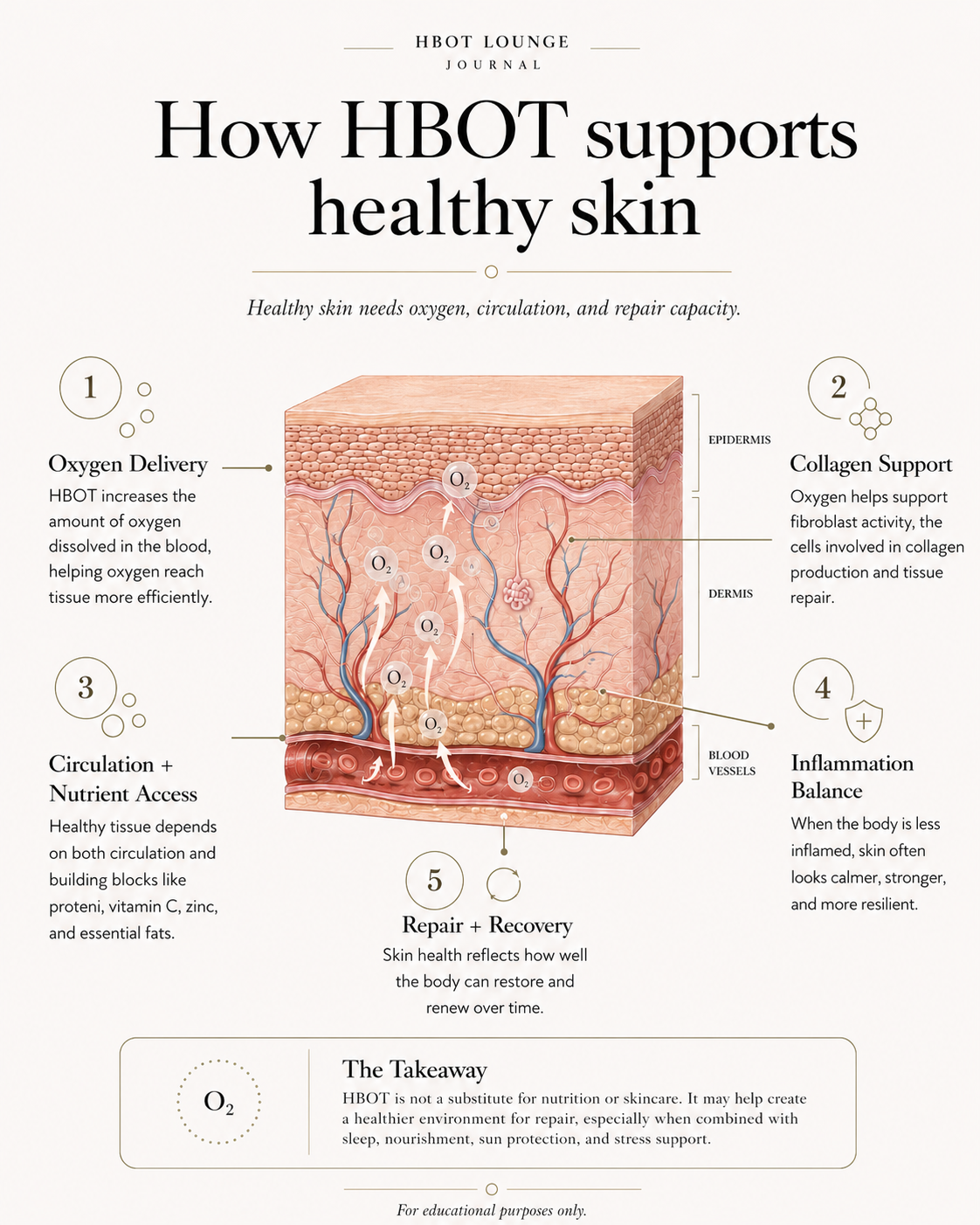
Your body uses oxygen to create energy, support immune function, form new blood vessels, build collagen, and repair tissue.
Hyperbaric oxygen therapy, or HBOT, is being studied because it increases oxygen availability by delivering oxygen under increased atmospheric pressure. Under pressure, more oxygen can dissolve into the bloodstream and reach tissues that may not receive adequate oxygen under normal conditions.
In wound healing research, HBOT has been studied for its ability to support oxygen delivery, angiogenesis, fibroblast activity, collagen formation, and tissue repair. These mechanisms are why HBOT is used medically in specific wound and injury settings, and why researchers are increasingly interested in its broader role in tissue regeneration and healthy aging.
This does not mean HBOT is a magic anti-aging treatment.
It does not replace sleep.
It does not replace nutrition.
It does not replace sun protection.
It does not replace stress management.
But it is one meaningful tool in a larger healthy aging strategy because oxygen is central to the body’s natural repair systems.
That is the bigger conversation.
Not just how do we look younger.
But how do we help the body function better, repair better, and recover better as we age?
What Biological Age Really Means
Your chronological age is the number of years you have been alive.
Your biological age reflects how your cells, tissues, and systems are functioning.
Chronological age moves in one direction.
Biological aging is more dynamic.
Researchers use tools such as DNA methylation clocks to estimate biological aging patterns, and these tools are based on epigenetic changes that accumulate over time. The science is still evolving, but the message is clear: aging is not only a calendar process. It is also a biological process influenced by environment, behavior, stress, inflammation, and cellular function.
This is why two people can be the same age on paper and feel completely different in real life.
One may feel energized, resilient, and vibrant.
The other may feel inflamed, exhausted, and older than their years.
The calendar may be the same.
The biology may not be.
Myth vs Fact
MYTH
Looking younger is mostly determined by your genes.
Some people are simply lucky.
FACT
While genetics matter, they are only one small piece of healthy aging.
Lifestyle, environment, and cellular health all influence how your skin changes over time.
Research suggests that improving oxygen delivery, reducing inflammation, and supporting tissue repair may contribute to healthier, more resilient, younger-looking skin.
What You Can Do Today
You do not need to overhaul your life to begin supporting healthier skin aging.
Start with the foundations.
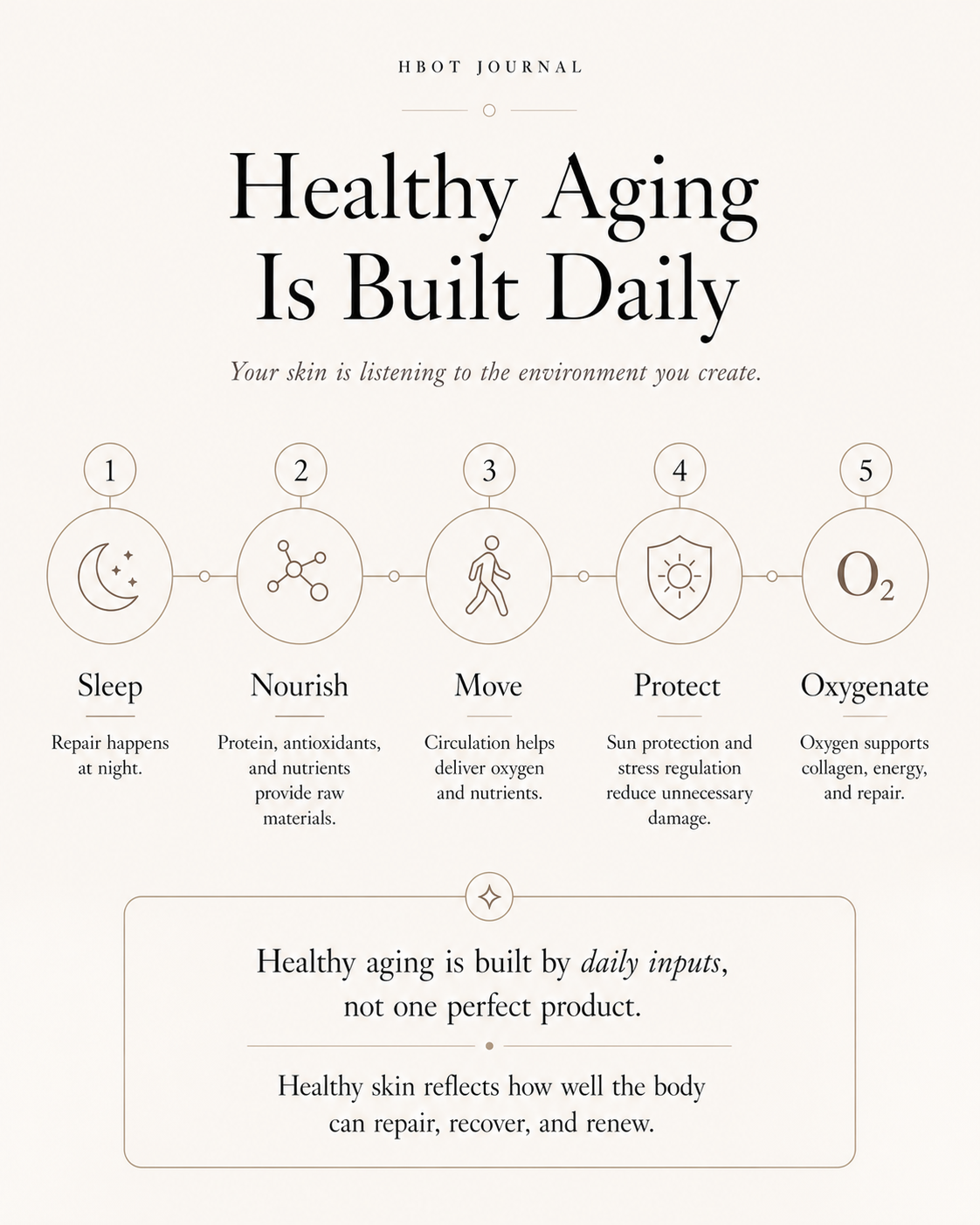
Prioritize protein.
Collagen, elastin, enzymes, and tissue repair all require amino acids.
Protect your skin from unnecessary UV damage.
Sunlight matters, but repeated UV injury accelerates photoaging.
Sleep like repair depends on it.
Because it does.
Move daily.
Circulation helps deliver oxygen and nutrients to tissues.
Reduce chronic inflammation.
Inflammation is useful when it is short-term. It becomes damaging when it becomes chronic.
Support oxygen delivery.
Breathwork, movement, cardiovascular health, and therapies such as HBOT all belong in the larger conversation about tissue oxygenation and repair.
A Simple Way to Think About It
Your skin is not asking for perfection.
It is asking for support.
Every day, your cells are listening to the environment you create.
Sleep tells your body it is safe to repair.
Food gives your body the raw materials.
Movement improves circulation.
Stress regulation lowers the alarm signal.
Oxygen helps fuel the work.
Healthy aging is not about stopping time.
It is about helping your body respond to time with more resilience.
Aging is inevitable.
How we support the aging process is where the opportunity lives.
Your skin is not separate from the rest of your health. It is a visible reflection of the body’s ability to repair, recover, and renew.
And while genetics may write the first chapter, they do not write the whole story.
Healthy aging isn’t something you’re born with.
It’s something you build.
Research We Looked At
Skin aging risk factors
Oxidative stress and photoaging
Epigenetics and biological aging
Hyperbaric oxygen therapy and anti-aging